Bench tool
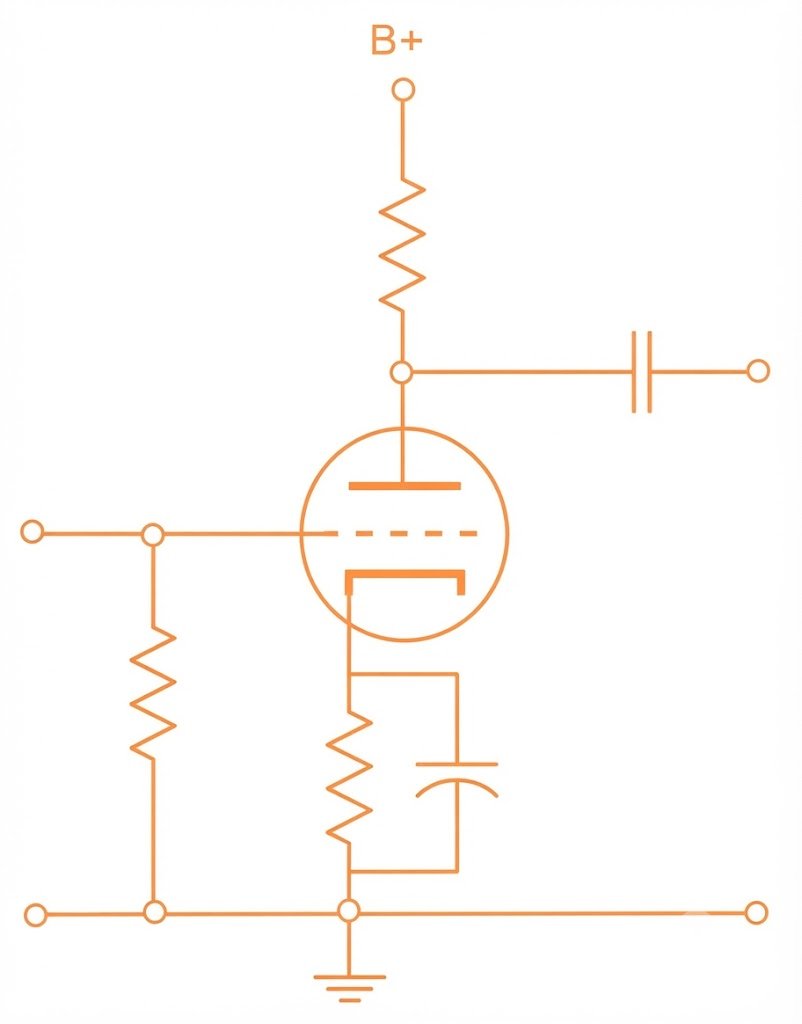 Ra
Ck
Rk
Ra
Ck
Rk
Find Corner Frequency
Enter the stage's component values and the tube's operating parameters — get back the actual -3dB point, which sits higher than a plain Rk×Ck estimate because of the tube's own gain.
Size Cap for Target Frequency
Same circuit, solved the other way — pick the corner frequency you want and get the capacitor value.
The bypass cap sees the cathode resistor Rk in parallel with the tube's own dynamic cathode resistance, (Ra + rp) / (mu + 1) — not just Rk alone. That extra term is usually smaller than Rk, which is why real corner frequencies run higher than a naive 1/(2πRkCk) estimate. rp shifts with the actual operating point (plate voltage and current), so treat the tube-preset values as a starting point and substitute your datasheet or measured figure for precision.
Common practice: a corner well below 20 Hz (5–15 Hz) keeps the stage fully bypassed across the audible band. Deliberately raising the corner into the 50–200 Hz range is a known way to thin out and tighten low end in a specific gain stage — some classic designs use a small cathode cap for exactly that reason.